Launchpad Jobs: Empowering Our Youth to Make Good Career Choices
By Judy Goldstein, SVP Managing Director at Britebound
New research shows nearly one in five workers without a college degree out-earn the average college graduate — and about two million nondegree workers bring home six figures a year. So why are we still treating college as the only path forward?
In partnership with the Burning Glass Institute, BriteBound researched what it actually takes for young adults without a degree to land high-potential, well-paying, stable careers. They call these roles "Launchpad Jobs." Here, Judy Goldstein breaks down what states and schools can do right now to set students up for real career success.
Give high school students access to work-based learning
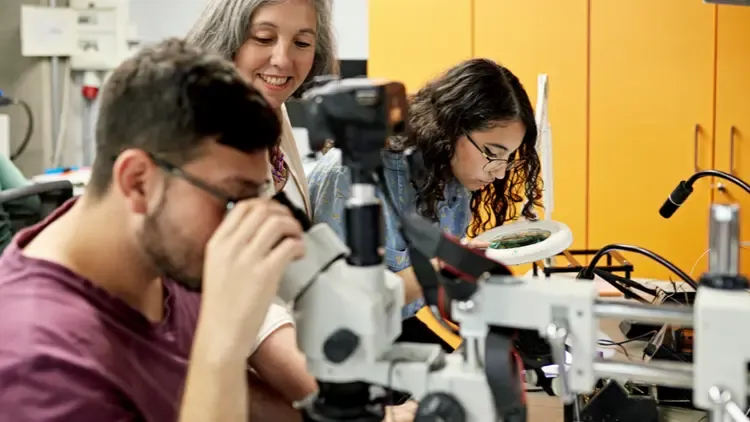
Young people need chances to explore different roles and industries before they graduate. Work-based learning — think internships, job shadows, and hands-on programs — helps students discover what they're good at and what they actually enjoy. And it's not just good for students: one recent employer survey found that 86% of respondents said high school internship programs strengthen their industry pipeline.
Expand Career and Technical Education (CTE) partnerships
Many Launchpad Jobs require a targeted set of technical skills — things like preventive maintenance, electrical wiring, and working with hand tools. CTE programs have a strong track record of training students in exactly these areas. Expanding these partnerships to reach more students (not just those on a college-prep track) and offering credentials along the way can open up a direct path to high-growth, stable careers.
Increase access to self-service career resources
School counselors are valuable, but today's Gen Z students are used to doing their own research on their own time. High-quality digital tools and apps can give students the career exploration content they need — wherever and whenever it's most useful to them. Students also benefit from real data on prospective employers, including how companies support economic mobility for their workers over time.
Broaden the scope of post-secondary planning
Most states publicly track "College and Career Readiness" — but in practice, the focus lands heavily on college. Students heading straight into the workforce often get left behind with little career guidance.
Fixing this means equipping school counselors with better tools and training on career pathways, and rethinking what "post-secondary success" even looks like. Tracking things like the percentage of students pursuing apprenticeships or landing Launchpad Jobs would give a much fuller picture of long-term outcomes.
The Bottom Line
Every year, there are more than 3.5 million nondegree, entry-level job openings in careers that offer real advancement, solid wages, or both. But young adults need the right information to find them.
When we give students insight into what different careers actually require — the skills, the training pathways, the long-term earning potential — we give them the tools to make choices that actually fit their lives. That's what career empowerment looks like.