Believing in the Potential of a Career Readiness Utopia
Contributions by Mike Murphy, Director, Strategic Communications at Britebound
Did you know that 70% of Americans haven't completed a four-year college degree? Yet most of K-12 education in the United States is built around the idea that college is the goal for every single student. That's a big mismatch — and kids are the ones paying the price for it.
At this year's ASU+GSV conference, Tom Vander Ark of Getting Smart led a panel with education leaders from across the country to talk about what it would look like to change that. The big idea? Instead of a "college for all" mindset, schools should focus on helping students explore a wide range of paths after graduation — with college being just one of many great options. And that exploration should start early, when there's still plenty of room to experiment, change your mind, and figure out what you're really passionate about.
So what would a career readiness utopia actually look like? Here's what the panelists envisioned:
- Historically marginalized students having access to social capital that has long been denied.
- Kindergarten students drawing what they want to do every week.
- Students following their passions, doing real career exploration, and everybody learning durable skills.
- Real-world problem-solving that starts early.
- A system so flexible that when a kid wants to be a firefighter in kindergarten, they still get to change their mind later.
- Kids graduating with academic mastery of reading and STEM — and also with skills like communication, collaboration, work ethic, and financial and digital literacy.
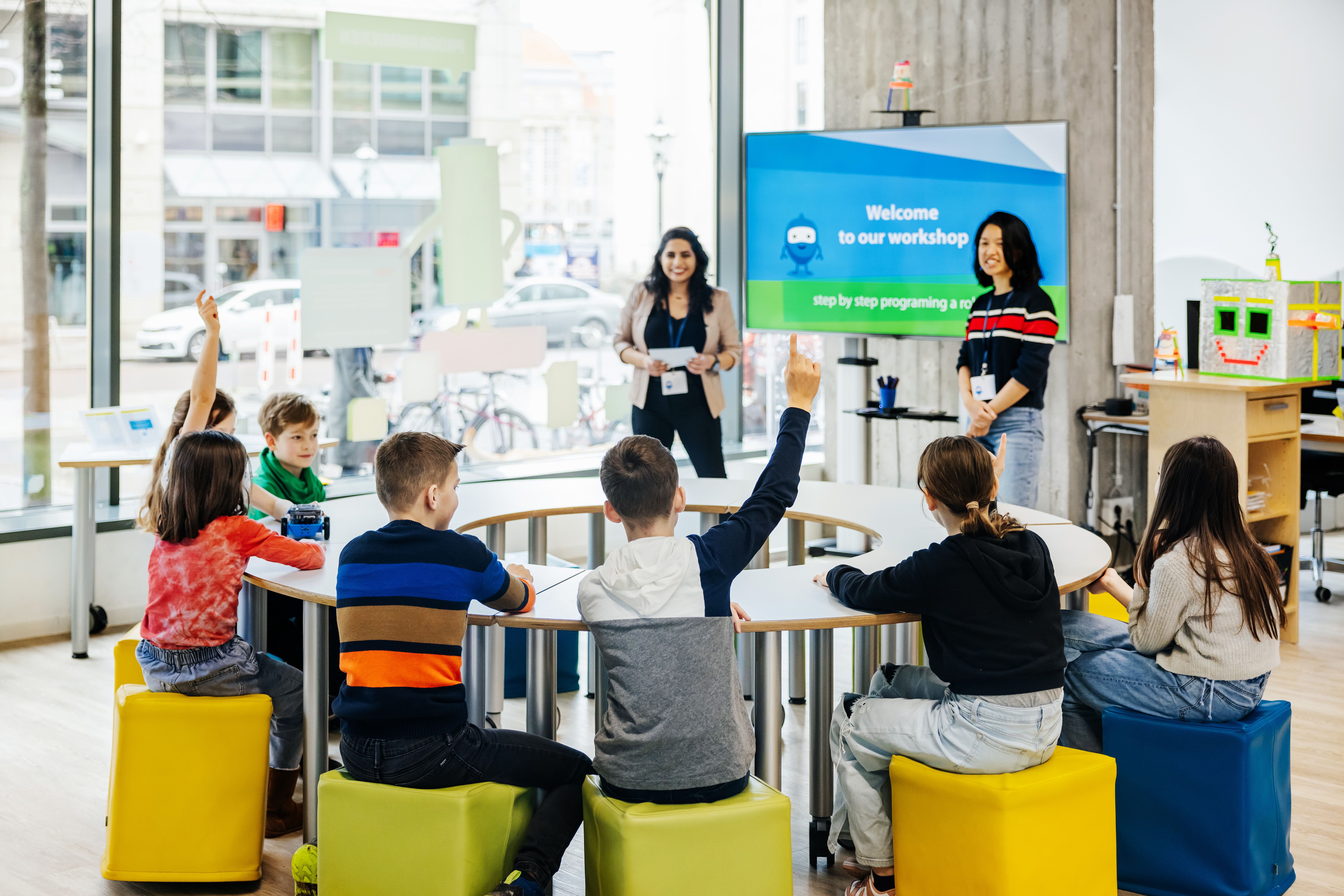
The exciting part? This vision is already coming to life in many places. Students around the country are building real skills through project-based learning, entrepreneurship, and hands-on career exploration. One powerful example came from a group of students at Hollywood High School who were tasked with creating a two-minute documentary trailer to pitch to real executives. They chose to tell the story of segregation in Los Angeles — and in doing so, they wrote scripts in English class, studied Brown v. Board of Education in social studies, learned statistics in math, studied how camera lenses work in physics, and mastered storyboarding and video editing in their media class. Their pitch? It went straight to the Vice President of MTV.
That kind of experience is what career readiness is all about. When young people are given the right tools, the right motivation, and a real reason to learn, they rise to the challenge every time. Career exploration is one of the most powerful ways we can make sure every student — college-bound or not — feels capable of setting and reaching their own goals.
GoZig is just one tool meant to bring us closer to a career-reading utopia. Try it out today.